 arXiv
 GitHub
 Hugging Face
 BibTeX
01 · FUSION
Reliability-weighted latent fusion
Geometrically and visually compatible observations are recursively fused, consolidating repeated evidence into a shared latent scene representation.
Loading memory…
Drag to rotateClosed-loop revisit
Back to the initial viewpoint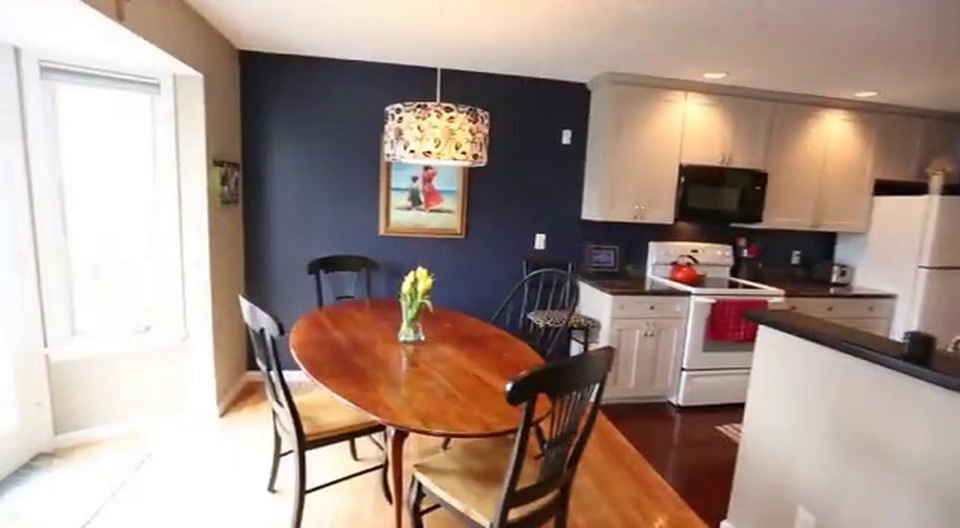
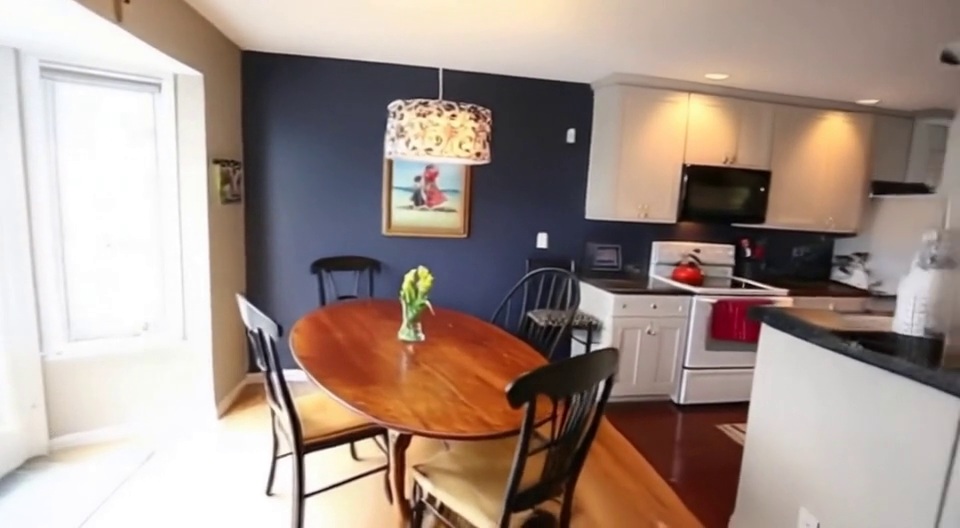
Archived RealEstate10K demonstrations
Persistent latent spatial memory with a read–generate–update cycle.
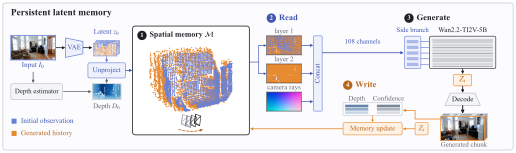
Geometrically and visually compatible observations are recursively fused, consolidating repeated evidence into a shared latent scene representation.
Multiple depth-ordered latent candidates, together with their reliability and availability, give the generator access to evidence from different surfaces.
Generated observations are written back into spatial memory, preserving scene history beyond the context window for later revisits.
Each row shows the same scene across methods. Play a row together or select a video to enlarge it.
Eight selected scenes · shared target camera trajectories
Ten selected WorldScore scenes · same input and requested camera motion. Wan2.2, CogVideoX and LTX-Video receive camera instructions through text.
LSM-World is our reproduction. Selected qualitative examples are shown here; aggregate scores are reported below.
Static averages seven control and quality metrics; Dynamic also includes three motion metrics. Avg. is their mean. Higher is better.
| Method | Avg. | Static | Dynamic | Cam. | Obj. | Content | 3D | Photo. | Style | Subj. | Acc. | Mag. | Smooth. |
|---|---|---|---|---|---|---|---|---|---|---|---|---|---|
| WonderWorld | — | 63.82 | — | 67.61 | 40.75 | 68.78 | 79.43 | 84.53 | 62.10 | 43.56 | — | — | — |
| Spatia | 64.47 | 66.65 | 62.29 | 55.67 | 65.75 | 37.75 | 85.83 | 89.49 | 82.09 | 49.96 | 58.27 | 26.48 | 71.64 |
| LSM-World | 56.59 | 59.70 | 53.47 | 57.27 | 38.25 | 42.64 | 83.59 | 64.41 | 80.58 | 51.17 | 49.08 | 26.74 | 40.94 |
| Wan2.2-TI2V-5B | 64.27 | 67.33 | 61.21 | 33.53 | 54.59 | 46.84 | 90.01 | 89.33 | 95.12 | 61.88 | 55.01 | 28.93 | 56.86 |
| LTX-Video | 63.48 | 64.58 | 62.39 | 30.82 | 61.25 | 49.34 | 91.23 | 94.94 | 72.81 | 51.67 | 57.85 | 27.11 | 86.83 |
| CogVideoX | 60.34 | 62.66 | 58.02 | 44.80 | 42.00 | 55.09 | 81.00 | 81.82 | 74.46 | 59.44 | 59.81 | 30.70 | 51.13 |
| ENGRAM | 67.78 | 69.97 | 65.60 | 66.92 | 57.00 | 41.89 | 85.84 | 91.90 | 86.67 | 59.57 | 52.47 | 24.76 | 88.95 |
Bold and underlined values indicate the best and second-best scores. A dash denotes a metric or aggregate not applicable to the method.
NVS evaluates frames 1–80. Closed-loop revisit compares frame 152 with the initial image.
| Method | Novel view synthesis | Closed-loop revisit | ||||
|---|---|---|---|---|---|---|
| PSNR ↑ | SSIM ↑ | LPIPS ↓ | PSNR ↑ | SSIM ↑ | LPIPS ↓ | |
| ViewCrafter | 8.494 | 0.3405 | 0.7852 | 9.540 | 0.3467 | 0.7468 |
| FlexWorld | 11.167 | 0.5805 | 0.6684 | 12.191 | 0.6089 | 0.5612 |
| Spatia | 16.745 | 0.6832 | 0.3525 | 15.978 | 0.6827 | 0.3373 |
| LSM-World | 15.624 | 0.6311 | 0.4148 | 12.235 | 0.3716 | 0.7487 |
| ENGRAM | 17.568 | 0.6975 | 0.3212 | 20.455 | 0.7692 | 0.2200 |
All methods use the same evaluation protocol. LSM-World is our reproduction; see the paper for implementation details.